
Shrubs
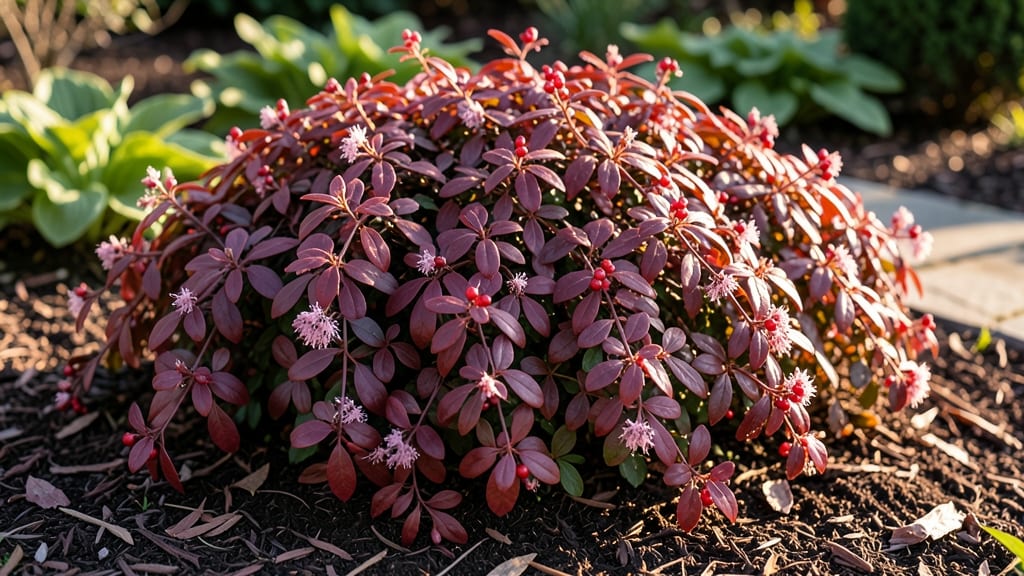
This dark red leaf bush transforms any garden into a bold statement. 🌿 The Cotoneaster franchetii or Berberis thunbergii 'Atropurpurea' brings year-round drama with their deep burgundy foliage that never fades—even in drought. My front yard's focal point?
A container planted with one of these, surrounded by silver-blue Lavandula for contrast. These shrubs thrive in containers with just 6 hours of sun and minimal watering once established. They handle heat, humidity, and even urban smog better than most plants.
The berries add winter interest, while spring flowers bring unexpected pops of color. Pair them with white Hellebores for a striking contrast or let them stand alone as a dramatic centerpiece. Their compact size makes them perfect for patios, balconies, or small gardens where space is limited.
For maximum impact, prune lightly after flowering to maintain shape. They’re nearly indestructible—ideal for busy gardeners who want low-maintenance, high-impact plants that keep giving all season.
📚 In This Guide
- What you need
- Instructions
- Tips and common mistakes
- Wrapping up and next steps
What you need
- ● Container: A well-draining pot (12–18 inches in diameter) with drainage holes. Terracotta or ceramic works best!
- ● Dark red leaf bush plant: Choose a Cotoneaster (e.g., Cotoneaster 'Royal Burgundy') or Pyracantha variety for vibrant foliage.
- ● Potting soil: 3–5 gallons of well-draining, slightly acidic mix (pH 5.5–6.5). Add perlite or sand (20–30%) for aeration.
- ● Mulch: 1–2 inches of pine bark fines or gravel to retain moisture and regulate temperature.
- ● Garden gloves (to protect your hands from thorns or rough edges).
- ● Trowel or small shovel for planting and soil adjustments.
- ● Watering can or hose with a gentle nozzle (avoid over-saturating the soil).
- ○ Fertilizer (optional): A balanced, slow-release granular fertilizer (10-10-10) or organic compost for a nutrient boost.
- ● Pruning shears (for shaping and maintenance after planting).
- ● Container saucer or tray to catch excess water and prevent mess.
- ● Drought-resistant additives: A handful of hydrogel crystals or coco coir to improve water retention.
- ● Decorative stones or pebbles for a polished, finished look.
How to plant and care for a dark red leaf bush in containers
Here's how to grow a stunning, drought-resistant dark red leaf bush that thrives in pots year after year.
🪴 Step 1: Select the Right Container and Soil Mix
Choose a container with drainage holes at least 12-14 inches deep—deeper roots mean better drought tolerance. I prefer terracotta because it breathes and helps regulate soil moisture. Fill the bottom third with gravel or coarse sand for extra drainage, then add a high-quality cactus/succulent mix blended with 20% perlite.
This mix prevents compaction, which is deadly for containerized plants. Tap the pot gently to settle the soil without compacting it. The goal is a loose, airy texture that mimics the bush's natural dry conditions. I always add a slow-release fertilizer pellet at planting to feed roots gradually.
🌱 Step 2: Plant at the Correct Depth and Position
Dig a hole twice as wide as the root ball but no deeper than the container's original planting depth. The top of the root ball should sit ½ inch below the container rim—this prevents water pooling during irrigation. Gently remove the plant from its nursery pot and loosen any circling roots with your fingers.
Place the bush in the center of the container and backfill with soil, pressing lightly to eliminate air pockets. Water immediately after planting to settle the soil around roots. The first watering should be deep enough that water runs out the drainage holes—this ensures roots establish quickly in their new home.
☀️ Step 3: Provide Full Sun and Minimal Watering
Dark red leaf bushes need 6+ hours of direct sun daily for their vibrant foliage. A south-facing spot delivers the best color intensity. If your patio only gets partial sun, expect the leaves to lose some vibrancy but the plant will still thrive.
Water only when the top 2-3 inches of soil feel completely dry. Stick your finger in the soil—if it's dry past your first knuckle, it's time to water. Overwatering is the #1 killer of containerized bushes. I use a self-watering pot in summer to maintain consistent moisture without drowning the roots.
✂️ Step 4: Prune for Shape and Health
Prune in early spring to shape the bush and encourage dense growth. Cut back leggy stems by ⅓ their length just above a leaf node. I always sterilize my pruners with rubbing alcohol between cuts to prevent disease spread.
Remove any yellow or dead leaves immediately—they sap energy from healthy growth. If the bush gets too large for its container, it's time to repot. Spring is the best time to upgrade to a larger pot, which gives roots room to grow without disturbing the plant's established routine.
🌿 Step 5: Fertilize and Overwinter Care
Feed every 6-8 weeks during growing season with a balanced liquid fertilizer diluted to half strength. Too much fertilizer causes salt buildup in container soil, which burns roots. I flush the soil with water every 3 months to prevent this.
In winter, reduce watering to every 3-4 weeks unless your home stays very warm. Move containers to a sheltered spot if frost is forecasted. The bush will go semi-dormant but remains evergreen in most climates—just don't let it sit in soggy soil during cold snaps.
Tips & tricks for thriving containerized dark red leaf bushes
These plant care secrets will help you keep your drought-resistant beauty looking vibrant and healthy for seasons to come.
Container Selection Wisdom: While terracotta is my favorite material, fiberglass containers work well too—just avoid plastic, which holds moisture and can lead to root rot. The key is ensuring your container has drainage holes and is at least 12-14 inches deep. I've found that wider containers (16 inches or more) actually help prevent overwatering by giving the soil more surface area to dry out.
Soil Mix Strategy: That 20% perlite recommendation isn't arbitrary—it creates essential air pockets that prevent compaction. For even better drainage, consider adding 10% coarse vermiculite to your cactus/succulent mix. When tapping the pot to settle soil, do it gently—think "light patting" rather than "pounding." The goal is to eliminate air pockets without compressing the mix.
Watering Technique: The finger test for soil moisture works perfectly, but here's a pro move: use a moisture meter for precise readings, especially during summer heatwaves. When watering, aim for the soil's edge rather than pouring in the center—this encourages roots to spread outward. And remember, that first watering after planting should be thorough enough that water runs out the drainage holes completely.
Sunlight Optimization: While 6+ hours of direct sun is ideal, if your space only gets morning sun, rotate the container every few weeks to ensure even exposure. For indoor growers, supplement with a full-spectrum LED grow light for 8-10 hours daily. I've noticed that containers on south-facing decks develop the most vibrant foliage colors, while those in east-facing spots maintain good health but with slightly muted tones.
Pro Tips for Dark Red Leaf Bush
- These plant care secrets will help you keep your drought-resistant beauty looking vibrant and healthy for seasons to come.
- Container Selection Wisdom: While terracotta is my favorite material, fiberglass containers work well too—just avoid plastic, which holds moisture and can lead to root rot.
- Soil Mix Strategy: That 20% perlite recommendation isn't arbitrary—it creates essential air pockets that prevent compaction.
Frequently asked questions
How often should I water my dark red leaf bush in a container?
Water your dark red leaf bush when the top 1-2 inches of soil feel dry. Containers dry out faster than garden beds, so check daily in hot weather. Overwatering is worse than underwatering—ensure pots have drainage holes to prevent root rot. Pro tip: Mulch the soil surface to retain moisture!
Can dark red leaf bushes survive winter in containers?
Yes, but they need protection! Move pots to a sheltered spot (like a garage or under eaves) before temperatures drop below 20°F (-7°C). Wrap containers in bubble wrap or frost cloth for extra insulation. Prune lightly in early spring to encourage fresh growth. Warning: Avoid fertilizing in winter—it stresses the plant.
Why are the leaves on my bush turning yellow or brown?
Yellow leaves often signal overwatering or poor drainage, while brown edges can mean underwatering or sunburn. Check soil moisture and adjust your watering schedule. If leaves are crispy, the bush may need more shade. Troubleshoot: Repot if roots are crowded or soil is compacted.
Are there drought-resistant alternatives to dark red leaf bushes?
Try Lantana, Russian Sage, or Dwarf Crape Myrtle for similar low-maintenance, drought-tolerant beauty. Lantana offers vibrant blooms, while Russian Sage thrives in heat with striking purple foliage. All three love containers and minimal water once established.
When and how should I prune my dark red leaf bush?
Prune in early spring (before new growth) to shape the bush and encourage bushier growth. Use clean, sharp shears to cut back overly long stems by 1/3. Avoid heavy pruning in fall—it can stress the plant. Bonus: Pruning also removes dead or diseased branches.
What pests commonly affect dark red leaf bushes, and how do I treat them?
Watch for aphids, spider mites, or scale insects, which thrive in dry conditions. Treat mild infestations with a soapy water spray (1 tsp mild soap per quart of water). For severe cases, use neem oil or insecticidal soap. Prevent pests: Keep the bush healthy with proper watering and well-draining soil.
Wrapping up and next steps
The dark red leaf bush is a stunning, low-maintenance plant that brings bold color and resilience to your container garden—even in dry conditions! 🌿 With the right care, it’ll reward you with vibrant foliage and effortless beauty year after year.
Whether you’re a seasoned gardener or just starting out, this drought-tolerant shrub is a fantastic choice for adding drama to patios, balconies, or sunny spots.
Ready to transform your space? Start by picking your favorite variety, gathering the essentials, and planting with confidence. Watch your container garden bloom—literally and figuratively!