
Diseases
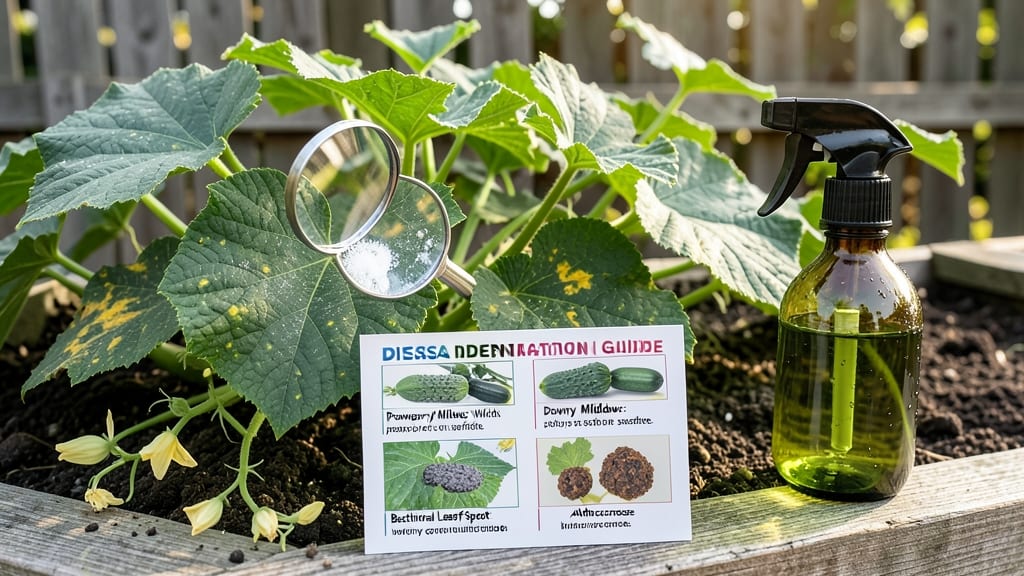
Cucumber plants with leaf diseases can go from lush and green to a sad, spotted mess in days—unless you catch it early. 🌿 I’ve seen powdery mildew turn my cucumbers into powdery white ghosts, and downy mildew leave yellow splotches that spread like wildfire.
The key is acting fast, before the whole plant checks out.
Most leaf diseases thrive in hot, humid conditions, so proper airflow and spacing are your first line of defense. I learned the hard way that crowded vines invite trouble—now I trellis my cucumbers and prune regularly to keep air moving.
The moment you spot white powder, yellow spots, or black speckles, you’ve got a fight on your hands.
Organic treatments like neem oil or baking soda spray can work wonders if you catch it early, but severe cases might need a fungicide. The goal is to save the plant, not just the leaves—so snip off the worst spots and focus on keeping the rest healthy.
Prevention is easier than cleanup, so I rotate crops and clean up debris every fall.
This isn’t just about saving your cucumbers—it’s about avoiding next year’s repeat performance. A little vigilance now means fewer battles later, and that’s a harvest worth fighting for. Let’s get those leaves looking green again.
Root Causes of Leaf Troubles
Cucumber plant leaf diseases rarely appear out of nowhere—they’re the result of a perfect storm of environmental, biological, and even cultural factors. Understanding why these issues arise is the first step to stopping them before they spread.
Below, we break down the key culprits behind cucumber leaf diseases, from fungal invaders to simple growing mistakes.
Fungi are the most common villains behind cucumber leaf diseases, thriving in warm, humid conditions. These microscopic organisms release spores that land on leaves, germinate, and eventually colonize plant tissues. Here’s how they exploit your garden:
- High Humidity + Warmth: Fungi like Pseudoperonospora cubensis (downy mildew) and Colletotrichum orbiculare (anthracnose) love temperatures between 70–85°F (21–29°C) paired with high humidity (70%+). Poor airflow between plants creates a damp, fungal-friendly microclimate.
- Water on Leaves: Overhead irrigation or morning dew provides the moisture fungi need to spore and infect. Unlike bacteria, fungi don’t need open wounds—they can penetrate healthy leaves via specialized structures called haustoria.
- Old or Weak Plants: Stressed cucumbers (from overcrowding, nutrient deficiency, or drought) have thinner cell walls, making them easier targets. Fungi also produce enzymes that break down plant cell walls, giving them a foothold.
💡 Pro Tip: Space plants 18–24 inches apart and avoid watering leaves after 10 AM to let foliage dry before evening humidity spikes.
Diseases don’t just happen—they’re often triggered by growing conditions that weaken your plants. These factors create the ideal conditions for pathogens to take hold:
| Factor | How It Helps Diseases Spread | Solution |
|---|---|---|
| Poor Air Circulation | Trapped moisture and stagnant air slow leaf drying, prolonging fungal spore survival. Crowded plants also shade lower leaves, keeping them damp longer. | Prune vines to improve airflow; use trellises to elevate plants. |
| Extreme Temperatures | Sudden heat or cold shocks (e.g., below 50°F/10°C or above 95°F/35°C) stress plants, making them susceptible to secondary infections. | Use row covers for frost; mulch to regulate soil temps. |
| Nutrient Imbalances | Too much nitrogen = soft, sappy leaves (loved by fungi). Too little potassium = weak cell walls, making plants vulnerable to pathogens. | Test soil; balance NPK with a 20-20-20 fertilizer or compost tea. |
✨ Key Insight: Most fungal diseases start as saprophytes (organisms that feed on dead matter) before becoming parasitic. Removing fallen leaves and debris reduces their food source.
Even the best-intentioned gardeners can accidentally invite problems. These common practices create entry points for pathogens:
- Overhead Watering: Splashing water spreads fungal spores from soil to leaves. Unlike drip irrigation, which delivers water to roots, overhead systems turn leaves into spore launchpads.
- Reusing Contaminated Tools: Pruners, stakes, or trellises can harbor fungal spores from previous seasons. If you planted cucumbers in the same spot last year, residual pathogens may still lurk in the soil.
- Ignoring Crop Rotation: Planting cucumbers (or other cucurbits like squash) in the same bed year after year leaves behind fungal spores in the soil. These spores can survive 2–3 years without a host.
- Planting Too Early or Late: Cool-season fungi (e.g., Alternaria) thrive when nights stay above 60°F (15°C). Starting seeds indoors and transplanting too soon can expose seedlings to soilborne diseases.
🎯 Prevention Hack: Solarize soil in late summer by covering beds with clear plastic for 4–6 weeks to kill fungal spores before planting.
Some leaf diseases aren’t caused directly by fungi or bacteria—they’re the result of pest damage that opens doors for pathogens. For example:
- Aphids and Spider Mites: These sap-sucking insects weaken leaves, creating wounds where fungi like Fusarium can enter. Their sticky honeydew also promotes sooty mold growth.
- Cucumber Beetles: These striped pests transmit bacterial wilt (Erwinia tracheiphila) while feeding, causing vascular blockages that turn leaves yellow and wilt.
- Slugs and Snails: Their feeding leaves irregular holes, providing entry points for water and spores to accumulate in leaf tissue.
🔥 Quick Fix: Use neem oil or kaolin clay to deter pests before they cause damage. For bacterial wilt, remove infected plants immediately—there’s no cure.
Fixing Fungal Foes on Cucumber Leaves
Now that you’ve identified the culprit behind your cucumber plant’s leaf troubles, it’s time to roll up your sleeves and take action! The good news? Most fungal diseases are manageable with the right approach.
Below, we’ll map out targeted fixes for each common issue—plus prevention tips to keep your plants thriving long-term. Think of this as your cucumber plant’s emergency repair kit!
🔥 Cause: White, powdery spots on leaves (like dust, but not so innocent). 👨🍳 Fix It:
- Prune the Problem
- Snip off severely infected leaves with
- Dispose of them in the trash—not the compost! Fungal spores can survive there.
- Neem Oil or Baking Soda Spray (🌿 Organic Options)
- Mix: 1 tsp baking soda + 1 quart water + a few drops of dish soap (helps it stick).
- OR 1 tbsp neem oil + 1 tsp mild soap + 1 quart water.
- Spray early in the morning (avoid direct sun) every 5–7 days until symptoms fade.
- Boost Airflow
- Space plants 12–18 inches apart and stake vines to prevent humidity buildup. 🌬️
- Use a fan on low speed near plants for 1–2 hours daily (trust us, cucumbers love a breeze!).
✨ Prevention Pro Tips:
- Rotate crops—don’t plant cucumbers in the same spot yearly.
- Water at the base (never overhead) and water early so leaves dry by evening.
- Reflective mulch (like aluminum foil) under plants can deter mildew by increasing light.
🔥 Cause: Yellow spots on top, fuzzy gray growth underneath (like a ghostly blanket). 👨🍳 Fix It:
- Remove Infected Leaves Immediately
- Downy mildew spreads
- Copper Fungicide or Hydrogen Peroxide Spray (🛡️ Fast-Acting)
- Option 1: Mix 1 tbsp copper fungicide (like Bonide) with 1 gallon water. Spray every 7–10 days.
- Option 2: 3% hydrogen peroxide (1 part HP + 3 parts water). Spray every 3 days until clear.
- Adjust Watering Habits
- Water deeply but infrequently—soil should dry between waterings. 💧
- Avoid evening watering (wet leaves overnight = mildew party).
✨ Prevention Pro Tips:
- Plant resistant varieties like ‘Armenia’ or ‘Straight Eight’ cucumbers.
- Crop rotation is a must—wait 3 years before replanting cucumbers in the same spot.
- Row covers (floating fabric) can block spores during outbreaks.
🔥 Cause: Dark, water-soaked spots with yellow halos (like a bullseye). 👨🍳 Fix It:
- Isolate the Plant
- Bacterial diseases spread
- Copper-Based Bactericide (🛡️ Only Effective Treatment)
- Use copper hydroxide or copper sulfate (follow label rates). Spray every 7–14 days until new growth appears healthy.
- Sterilize Everything
- Wash hands, tools, and containers with 10% bleach solution (1 part bleach + 9 parts water). ⚗️
- Do NOT compost infected plant material.
✨ Prevention Pro Tips:
- Rotate crops—bacteria can linger in soil for years.
- Avoid overhead irrigation—use drip systems instead.
- Harvest promptly—stressed plants (overcrowded or nutrient-deficient) are more susceptible.
🔥 Cause: Dark, sunken lesions on leaves and fruit (looks like a bruise). 👨🍳 Fix It:
- Destroy Infected Plant Debris
- Burn or trash
- Fungicide Rotation
- Alternate between
- Improve Plant Health
- Prune for airflow—thin vines to reduce humidity.
✨ Prevention Pro Tips:
- Solarize soil in late summer: Cover soil with clear plastic for 4–6 weeks to kill spores.
- Plant in well-draining soil—anthracnose thrives in soggy conditions.
- Use resistant varieties like ‘Marketmore 76’ cucumbers.
Want to keep fungal threats at bay?
Follow this year-round routine: - 🌱 Start with clean seeds/transplants—buy from reputable suppliers. - 🌿 Mulch with straw or grass clippings (2–3 inches deep) to prevent soil splash. - 🌡️ Monitor humidity—aim for 40–60% (use a hygrometer if needed). - 🧼 Sterilize tools before and after use (rubbing alcohol works). - 🌅 Plant in full sun (6+ hours daily)—healthy plants resist diseases better!
💡 Final Tip: If diseases keep returning, test your soil pH (ideal: 6.0–6.8). Fungal growth loves acidic soil—amend with lime if needed.
Now grab your spray bottle and get to work—your cucumbers will be back to their crisp, disease-free selves in no time! 🥒✨
Frequently asked questions
What’s the fastest way to tell if my cucumber leaves have powdery mildew?
Look for white, powdery patches that resemble dust or flour on the leaf surface. Rub a finger across the spots—if it leaves a white mark, it’s powdery mildew. Unlike other diseases, this one stays on the leaf surface and doesn’t cause yellowing first. Check the undersides of leaves too, as spores often start there.
Can I still eat cucumbers if the leaves have spots or lesions?
It depends on the disease! For fungal issues like powdery mildew or downy mildew, the fruit itself is usually safe to eat as long as the leaves aren’t severely infected. However, if you see bacterial spots (dark, water-soaked patches) or anthracnose (sunken lesions), remove the entire plant—these can contaminate the fruit. Always wash cucumbers thoroughly before eating.
How often should I spray neem oil on my cucumber plants for prevention?
Apply neem oil every 7–10 days during the growing season as a preventive measure. For active infections, spray every 5–7 days until symptoms disappear. Always apply in the early morning or late evening to avoid harming beneficial insects, and reapply after rain. Mix 1 tablespoon neem oil with 1 teaspoon mild soap and 1 quart water for best results.
Will crop rotation really help if I’ve had cucumber leaf diseases before?
Crop rotation is one of the most effective long-term solutions. Fungal spores can survive in soil for 2–3 years, so wait at least that long before replanting cucumbers (or other cucurbits like squash or pumpkins) in the same spot. Rotate with non-related plants like beans, tomatoes, or herbs, which don’t harbor the same pathogens. This breaks the disease cycle and reduces spore buildup.
What’s the best time of day to water cucumbers to prevent leaf diseases?
Water your cucumbers early in the morning (before 10 AM) to give leaves plenty of time to dry. Wet leaves overnight create the perfect conditions for fungal spores to germinate and infect. Avoid evening watering entirely—this is when humidity peaks, turning your garden into a fungal buffet. Use drip irrigation or soaker hoses to keep water at the roots and off the foliage.