
Shrubs
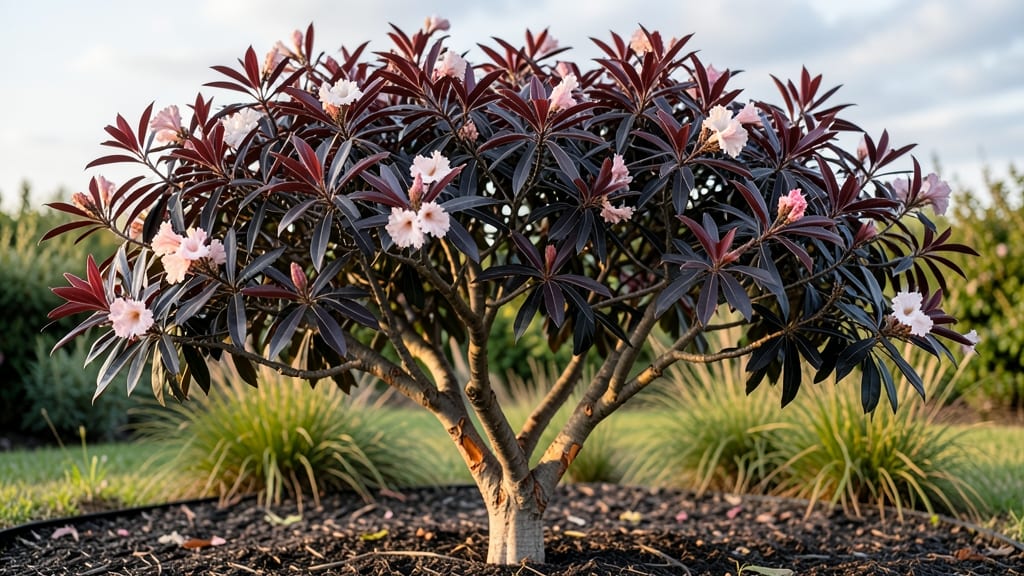
Growing black leaf crepe myrtle transforms any yard into a dramatic, low-maintenance statement. 🌿 This dark-foliaged beauty thrives in heat and drought once established, its deep burgundy leaves providing year-round interest.
My first one took root in a hot, dry corner where nothing else survived—now it's the centerpiece of my summer garden. The secret to success starts with well-draining soil and full sun exposure. Crepe myrtles tolerate poor soil but reward rich, sandy loam with faster growth.
Water deeply once a week after planting, then let nature take over—these plants hate soggy roots but bounce back from drought once mature. You'll love how it handles pruning like a pro.
Simply trim back leggy branches in late winter to encourage bushier growth, and watch it explode with vibrant foliage by spring. The dark leaves contrast beautifully with any flowering shrubs nearby, creating a striking visual impact. Perfect for hot climates, urban landscapes, or as a privacy screen.
With proper care, your black leaf crepe myrtle will outlast trendy annuals and become a cherished landscape staple.
Root Causes Of Darkened Foliage
Blackened or dark leaves on crepe myrtles can be a distress signal from your plant, often tied to environmental stress or underlying health issues. Understanding the why behind this problem is the first step toward restoring your shrub’s vibrant, lush appearance.
Below, we break down the most common culprits—each with a clear scientific explanation and actionable insights to help you diagnose and address the issue.
Crepe myrtles are drought-tolerant, but prolonged heatwaves or insufficient water can trigger cellular damage in leaves, causing them to darken, crisp, or turn black. Here’s what’s happening:
- Water Deficit: When roots struggle to absorb enough moisture, the plant’s stomata (tiny leaf pores) close to conserve water. This disrupts photosynthesis, leading to oxidative stress—a buildup of harmful free radicals that damage chlorophyll (the green pigment in leaves). Without chlorophyll, leaves lose their color and may darken or blacken.
- Heat Stress: Temperatures above 90°F (32°C) for extended periods can denature proteins in leaf cells, including enzymes critical for nutrient transport. This causes necrosis (cell death), often starting at leaf edges and spreading inward.
- Soil Moisture Imbalance: Sandy or rocky soils drain too quickly, leaving roots thirsty even if you’ve watered recently. Clay soils, meanwhile, may hold excess water, suffocating roots and preventing oxygen uptake—both scenarios stress the plant.
💡 Pro Tip: Test your soil’s moisture by sticking your finger 2–3 inches deep. If it’s dry, water deeply 1–2 times per week (more in extreme heat). Use mulch (2–3 inches of wood chips or straw) to retain moisture and regulate soil temperature.
Dark, sooty patches or blackened leaves are classic signs of fungal pathogens, which thrive in humid, stagnant conditions. The most common offenders for crepe myrtles include:
| Fungus | Symptoms | Why It Happens |
|---|---|---|
| Anthracnose (Colletotrichum spp.) | Dark, sunken spots with yellow halos; leaves may curl or drop prematurely. | Fungal spores splash onto leaves from infected soil or water droplets. Warm, wet springs (60–80°F / 15–27°C) and poor air circulation create the perfect breeding ground. |
| Sooty Mold (Capnodium spp.) | Black, velvety film on leaves (often mistaken for dirt). | This isn’t a primary pathogen—it grows on honeydew (a sticky residue left by aphids, scale, or whiteflies). The mold blocks sunlight, suffocating leaves and turning them dark. |
| Root Rot (Phytophthora or Fusarium) | Wilting, blackened leaves (often starting at the bottom); mushy, foul-smelling roots. | Overwatering or compacted, waterlogged soil deprives roots of oxygen. Anaerobic conditions allow fungal spores to multiply, cutting off nutrient flow to the leaves. |
🔥 Action Steps:
- Prune infected branches 6–12 inches below the damage (sterilize shears with rubbing alcohol).
- Apply copper fungicide (e.g., Bordeaux mixture) at the first sign of spots, repeating every 7–10 days.
- Improve airflow by thinning dense foliage and avoiding overhead watering.
- For root rot, reduce watering and amend soil with perlite or compost to improve drainage.
Pests like aphids, scale, and spider mites feed on plant sap, injecting toxins that disrupt leaf function. Their waste (honeydew) also attracts sooty mold, compounding the problem. Here’s the science:
- Direct Damage: Pests pierce leaf cells with their stylets (mouthparts), creating wounds that leak sap. This triggers the plant’s jasmonic acid defense response, which can prematurely age leaves, turning them dark or black.
- Nutrient Starvation: Heavy infestations divert nutrients from leaves to support pest growth. Without adequate nitrogen and chlorophyll, leaves lose their green hue and may develop necrotic (dead) spots.
- Secondary Infections: Honeydew creates a sticky surface that traps fungal spores, leading to sooty mold—another layer of stress.
🎯 Treatment Plan:
- Blast pests off with a strong stream of water (early morning works best).
- Use neem oil (1 tsp per quart of water) or insecticidal soap to suffocate eggs and adults.
- Introduce beneficial insects like ladybugs or lacewings to control populations naturally.
- For severe cases, apply systemic insecticide (e.g., imidacloprid) before buds break in spring.
Dark, purplish-black leaves are often a cry for help—specifically, a lack of essential nutrients. Here’s how deficiencies manifest:
| Nutrient | Deficiency Signs | Why It Happens |
|---|---|---|
| Magnesium | Interveinal chlorosis (yellowing between veins) that progresses to dark brown/black patches. | Magnesium is central to chlorophyll production. Poor soil, acidic conditions (pH < 6.0), or excessive potassium can lock it out of root uptake. |
| Nitrogen | Overall dark green to blackish leaves (especially older foliage); stunted growth. | Nitrogen is critical for protein synthesis in leaves. Leached soils (from overwatering or heavy rain) or low organic matter deplete it quickly. |
| Iron | Young leaves turn yellow with dark veins; severe cases show blackened tips. | Iron is immobile in plants—once deficient, new leaves can’t access it. Alkaline soils (pH > 7.0) make iron
Fixing Blackened Crepe Myrtle LeavesWhen your crepe myrtle’s leaves turn black, it’s a clear cry for help—but don’t panic! With the right approach, you can revive your shrub and prevent future damage. Below are practical, step-by-step solutions tailored to the most common causes, plus prevention tips to keep your plant thriving. --- Fix it: 1. 🔥 Prune Infected Areas - Use sterilized pruning shears (wipe with rubbing alcohol) to remove blackened or spotted leaves. Dispose of them in the trash—not your compost bin—to prevent spreading spores. - Focus on inner branches where airflow is poor. 2. 🍳 Apply Fungicide - Spray with a copper-based fungicide (like copper sulfate) or a neem oil solution (1 tbsp neem oil + 1 quart water + a drop of dish soap as a surfactant). Reapply every 7–10 days until new growth appears. - Best time to treat: Early morning or late evening to avoid burning leaves. 3. 👨🍳 Improve Air Circulation - Thin out overcrowded branches to let sunlight and air reach the center. - Avoid planting crepe myrtles too close to walls or other shrubs. 💡 Prevention Tips: - Water at the base (avoid wetting foliage) to reduce humidity around leaves. - Space plants 6–10 feet apart for better airflow. - Choose disease-resistant varieties like ‘Natchez’ or ‘Tonto’ if fungal issues are recurrent. --- Fix it: 1. 🥘 Adjust Watering Habits - Drought stress? Water deeply 1–2 times per week (1–2 inches per week total). Use drip irrigation to deliver moisture directly to the roots. - Overwatering? Let the top 2 inches of soil dry out between waterings. Yellowing leaves + blackened edges = classic overwatering. 2. 🌡️ Protect from Extreme Temps - Heat waves? Provide afternoon shade with a lightweight shade cloth (30–50%) or mulch heavily (3–4 inches of wood chips) to retain moisture. - Frost damage? Cover young plants with burlap or frost cloth if temps drop below 25°F. Mature crepe myrtles are hardy but may need protection in their first few years. 3. ✨ Boost Soil Health - Amend soil with compost or aged manure to improve drainage and nutrient uptake. - Test soil pH—crepe myrtles prefer slightly acidic to neutral (6.0–7.0). 💡 Prevention Tips: - Mulch annually in late winter to regulate soil temperature. - Group plants together to create a microclimate that moderates temperature swings. - Avoid late-season fertilizing, which can encourage tender new growth vulnerable to frost. --- Fix it: 1. 🔪 Blast Off Pests - Hose down leaves with a strong stream of water to dislodge aphids or spider mites. - For scale insects, scrape them off with a plastic scraper or cotton swab dipped in rubbing alcohol. 2. 🍎 Use Natural Repellents - Insecticidal soap (1 tsp mild soap + 1 quart water) or horticultural oil (follow label rates) works well for soft-bodied pests. Spray every 5–7 days for 2–3 weeks. - Introduce beneficial insects: Ladybugs or lacewings eat aphids naturally. 3. 🌿 Prune Heavily Infested Branches - Cut and remove branches with visible webbing (mites) or sticky residue (scale). 💡 Prevention Tips: - Inspect new plants before bringing them home—quarantine for a week if pests are suspected. - Encourage predator plants like marigolds or dill nearby to attract beneficial insects. - Avoid broad-spectrum pesticides, which can kill helpful bugs too. --- Fix it: 1. 💪 Test Your Soil - Use a DIY soil test kit (available at garden centers) to confirm deficiencies. Black leaves often signal iron chlorosis (yellow veins) or magnesium deficiency (interveinal browning). 2. 🥗 Apply Targeted Fertilizers - Iron deficiency? Use an iron chelate fertilizer (follow package rates) or apply Epsom salt (1 tbsp per gallon of water) for magnesium. - Nitrogen deficiency? Add a balanced fertilizer (10-10-10) in early spring. 3. 🌱 Improve Soil Drainage - Crepe myrtles hate soggy roots. Amend clay soil with sand or perlite to prevent nutrient lockout. 💡 Prevention Tips: - Fertilize in early spring (March–April) and avoid fall applications, which can promote late-season growth vulnerable to frost. - Use slow-release granules instead of quick-release fertilizers to prevent nutrient spikes. - Mulch with compost to gradually enrich soil over time. --- Final Note: Most black leaf issues are reversible with timely action. Monitor your plant closely, and don’t hesitate to prune aggressively if needed—crepe myrtles are forgiving and bounce back beautifully with proper care! 🌿✨ Frequently asked questions about black leaf crepe myrtle
1
How fast does black leaf crepe myrtle grow?These shrubs grow at a moderate rate, typically adding 12-24 inches per year under ideal conditions. In the first few years, you’ll see the most dramatic growth, especially when planted in well-draining soil with full sun exposure. Mature specimens can reach 15-25 feet tall with a 10-15 foot spread, making them excellent privacy screens when given space.
2
Can black leaf crepe myrtle survive in containers?Yes, but with some adjustments! Choose a container at least 24 inches wide and deep with drainage holes. Use a fast-draining potting mix (like 60% native soil + 40% perlite) and water 2-3 times per week in hot weather. Container-grown specimens may need annual repotting and benefit from balanced fertilizer applied in early spring. Just be prepared to move them indoors or to a sheltered spot when temperatures drop below 20°F.
3
Why are my crepe myrtle leaves turning black?Blackened leaves usually signal one of three issues: fungal infection (like anthracnose), pest damage (aphids or scale creating honeydew), or environmental stress (over/under-watering or extreme heat). Start by checking for sooty mold (black film) or yellow halos around spots. Prune affected branches, improve airflow, and adjust watering—most cases respond within 2-4 weeks of proper care. For persistent issues, test your soil pH and nutrient levels.
4
When should I prune my black leaf crepe myrtle?The best time is late winter or early spring (just before new growth begins) to shape the plant and remove dead/diseased wood. Avoid heavy pruning in fall, as new growth won’t harden off before winter. For flowering varieties, prune after blooms fade to maintain next year’s flowers. Always use sterilized shears and cut back to bud unions (swollen areas where branches meet the trunk) for the cleanest regrowth.
5
Are black leaf crepe myrtles deer-resistant?They’re moderately resistant—deer usually avoid them unless other food sources are scarce. The dark foliage and slightly bitter taste often deter browsing, but young plants or stressed specimens may still get nibbled. For extra protection, plant near deer-repellent plants like Russian sage or lavender, or install physical barriers (like chicken wire) around new plantings until established. |