
Pests and Diseases
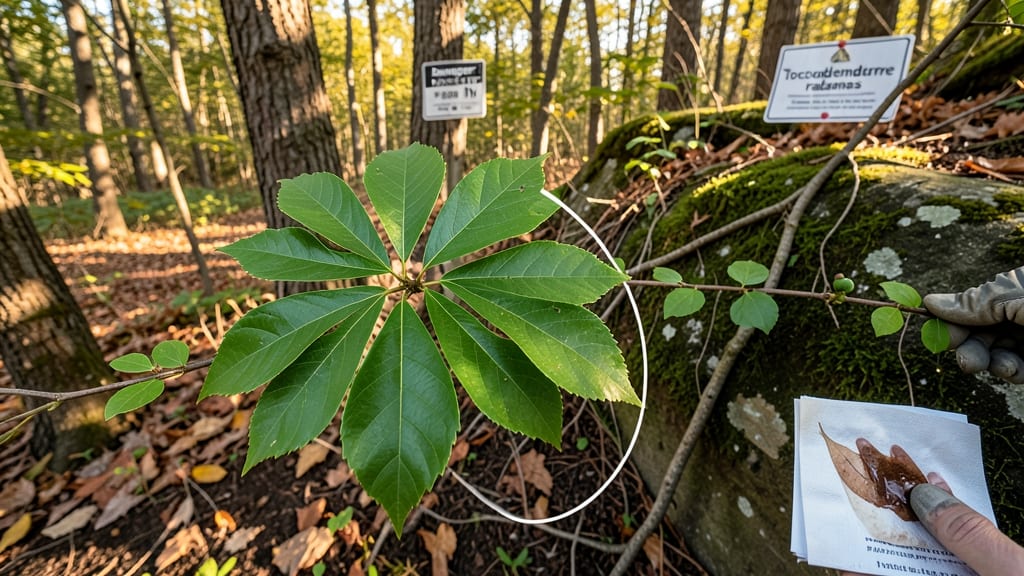
Five-leaf poison ivy grows with clusters of three shiny green leaves and a smooth vine or patchy red stem, often releasing an oily resin that causes severe allergic rashes on contact. Its leaves follow a 'leaflets in threes' pattern and turn red or orange in fall.
This toxic plant thrives in forests, parks, and even urban areas, so recognizing its distinctive three-leaf clusters is key to avoiding painful reactions. 🌿 The plant's signature oil, urushiol, triggers blisters in 85% of people who touch it, making proper identification and prevention essential.
Unlike harmless plants with five leaves, poison ivy's leaflets always grow in groups of three—an easy way to tell them apart. Understanding its growth habits helps you stay safe during hikes or gardening.
If you suspect you've encountered five-leaf poison ivy, avoid touching the area and wash exposed skin with soap and cold water immediately. The resin can linger on tools, clothing, or even pets, so thorough cleaning is critical.
For accidental exposure, over-the-counter hydrocortisone creams or calamine lotion can relieve itching, though severe cases may require medical attention.
💡 In This Article
- Identifying Poison Ivy Through Leaf Patterns and Growth Habits
- Safe Handling and Prevention Tips for Outdoor Gardeners
Identifying poison ivy through leaf patterns and growth habits
The most reliable way to spot poison ivy is its leaf arrangement: each leaflet grows in groups of three, following the botanical rule "leaves of three, let it be."
These leaflets are typically 2-5 inches long, with smooth or slightly toothed edges, and a glossy green surface that reflects light differently than similar plants. The middle leaflet often has a slightly longer stem, creating a distinctive triangular shape when viewed from above.
Poison ivy's stem texture is another key identifier. Young vines have a smooth, hairless surface, while mature plants develop a patchy, reddish-brown bark that can resemble tree bark.
The roots also give it away—poison ivy spreads aggressively through underground runners, forming dense patches that can cover entire garden beds or forest floors. In contrast, harmless lookalikes like Virginia creeper have five leaflets per cluster, and boxelder leaves grow in seven-to-nine leaflets.
The plant's seasonal changes provide additional clues. In spring, new leaves emerge a bright red before turning green, while fall brings vibrant red or orange hues that stand out against green foliage.
The urushiol oil responsible for allergic reactions remains active year-round, even on dead plants, so never assume dried leaves are safe. 🌿 This oil can also transfer through the air when plants are burned, creating dangerous smoke that carries urushiol particles for miles.
Understanding these botanical features helps distinguish poison ivy from harmless plants. For example, while boxelder leaves may resemble poison ivy at first glance, their compound structure with multiple leaflets makes them instantly identifiable.
The key is paying attention to these subtle but critical differences—especially the three-leaf clusters and stem characteristics—that set poison ivy apart from its lookalikes.
When examining plants, always start by observing from a distance to avoid accidental contact. Use a magnifying glass to inspect leaf arrangements and stem textures, and remember that poison ivy can grow as a vine, shrub, or ground cover.
This adaptability makes it particularly insidious in gardens and wooded areas where it can blend seamlessly with other vegetation.
For gardeners, recognizing poison ivy early is crucial. The plant's aggressive root system means even small patches can spread rapidly, overtaking desired plants. By familiarizing yourself with these identifying features, you can spot and remove poison ivy before it becomes a persistent problem in your outdoor spaces.