
Diseases
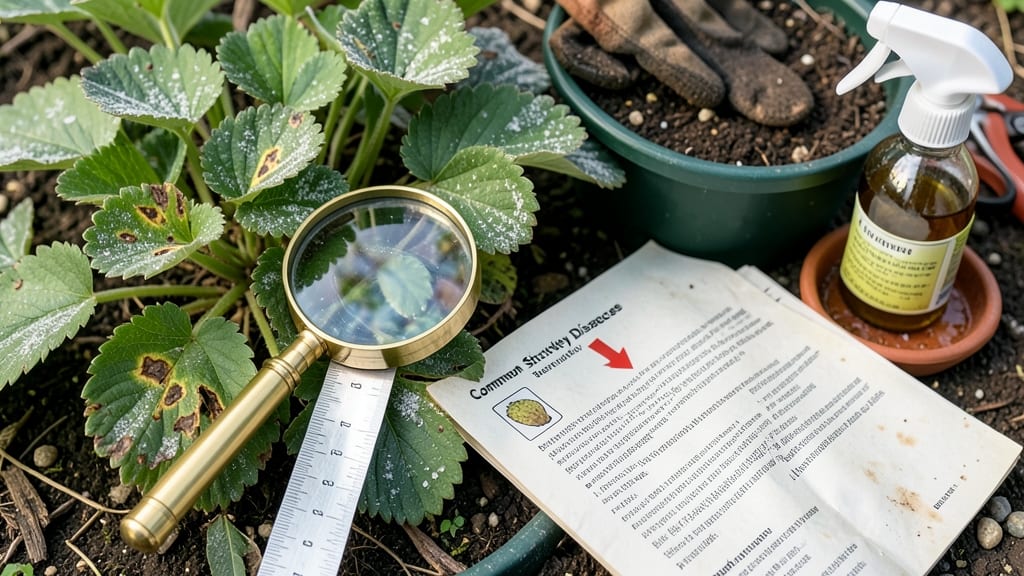
Strawberry leaf diseases can turn your lush plants into a sad, spotted mess in weeks. 🌿 I’ve lost entire beds to fungal infections—until I learned to spot the early signs and act fast.
The key is recognizing the patterns: yellow rings, gray fuzz, or white powder? Each tells a different story about what’s attacking your plants.
Most of these diseases start with poor air circulation, wet leaves, or old mulch. My biggest mistake? Ignoring the first tiny spots until they spread. Now I check plants every 7-10 days in humid weather and remove infected leaves immediately. Prevention is easier than cleanup—trust me, I’ve tried both.
You’ll learn to treat each disease with targeted solutions: baking soda sprays for powdery mildew, copper fungicides for leaf spots, or pruning to improve airflow. The goal isn’t just to save the leaves—it’s to protect your harvest and keep next year’s plants strong.
This works for home gardeners in any climate, from coastal humidity to dry summers. The chart breaks down symptoms visually, so you’ll never guess wrong again. Let’s get those berries thriving!
Root Causes Of Leaf Trouble
Strawberry plants may look delicate, but their leaves are surprisingly resilient—until they’re not. When fungal pathogens, environmental stressors, or poor growing conditions collide, your strawberries can develop unsightly (and often damaging) leaf diseases.
Understanding the why behind these issues is the first step to prevention. Let’s break down the key culprits.
Most strawberry leaf diseases are caused by fungi, which thrive in warm, damp conditions. These microscopic invaders don’t just appear—they wait for the perfect moment to strike. Here’s how they exploit your plants:
- Overhead Irrigation 💦 Fungi like Colletotrichum (anthracnose) and Botrytis (gray mold) spread via water splashing from leaves to soil—or worse, from infected plants to healthy ones. Pro tip: Use drip irrigation or soaker hoses to keep foliage dry.
- Poor Air Circulation 🌬️ Dense plantings or crowded rows trap moisture, creating a fungal paradise. Example: Phytophthora (a water mold) thrives in soggy, stagnant air. Solution: Space plants 12–18 inches apart and prune for airflow.
- Old or Weak Leaves 🍃 Fungi target stressed tissue first. Why? Weak leaves have thinner cuticles, making it easier for spores to penetrate. Actionable fix: Remove yellowed or diseased leaves immediately and compost them far from the garden.
🔍 Fun fact: Some fungi, like Ramularia (leaf spot), survive on plant debris over winter. That’s why fall cleanup is non-negotiable.
Fungi need three things to party: moisture, warmth, and food (your leaves). When Mother Nature delivers, diseases follow. Here’s how weather plays a role:
| Condition | How It Helps Fungi | Prevention Tip |
|---|---|---|
| 🌧️ Heavy Rain | Washes spores onto leaves and keeps them wet for hours. | Choose raised beds or sloped planting to improve drainage. |
| ☀️💧 High Humidity | Slows leaf drying, giving fungi 24–48 hours of ideal growth. | Use fungicide sprays (copper or neem oil) before rain. |
| 🌡️ Warm Nights (70–80°F) | Speeds up fungal reproduction (e.g., Diplocarpon for leaf scorch). | Mulch with straw to moderate soil temps and reduce nighttime humidity. |
⚠️ Warning: If your area has consistent rain + warm nights, diseases like Botrytis can spread exponentially in 7–10 days.
Even the hardiest strawberry varieties can fall prey to diseases if basic care is neglected. Here’s how human error fuels leaf problems:
- Overwatering 💦🚫 Strawberries need consistent moisture, but soggy soil is a fungal buffet. Rule of thumb: Water when the top 1–2 inches of soil are dry (test with your finger!).
- Ignoring Soil pH 📉 Fungi love acidic soil (pH < 5.5). Example: Phytophthora thrives in these conditions. Fix: Test your soil and amend with lime if needed (aim for pH 5.8–6.5).
- Reusing Contaminated Tools 🔪 Pruners, trellises, and even gloves can carry spores. Always sanitize with a 10% bleach solution (1 part bleach to 9 parts water) between plants.
- Planting Too Late in Season 🌱⏳ Young plants stressed by late planting or fall frosts are prime targets for Colletotrichum. Solution: Start transplants 4–6 weeks before your last frost date.
💡 Pro tip: Rotate crops! Planting strawberries in the same spot year after year lets fungal spores build up. Wait 3–4 years before replanting in the same area.
Now that you know why strawberry leaves turn into a fungal free-for-all, the next step is spotting the signs early. Stay tuned!
Fixing Fungal Foes on Strawberry Leaves
Strawberry leaf diseases can feel like a losing battle, but with the right strategies, you can turn things around—fast! Below, we’ve mapped out practical fixes for each common fungal issue, paired with prevention tips to keep your plants thriving.
Think of this as your battle plan: identify, attack, and protect.
---
Cause: Xanthomonas fragariae bacteria (often mistaken for a fungus but treated similarly). Fix It: - 🔥 Remove infected leaves immediately – Snip off yellowing or spotted leaves with clean scissors and dispose of them in the trash (not compost). - 💦 Space out watering – Water early in the morning (not overhead) to let leaves dry quickly. Use a soaker hose or drip irrigation to avoid wetting foliage. - 🌡️ Boost airflow – Prune nearby plants to improve circulation. Crowded strawberries = fungal paradise. - 🛡️ Copper-based bactericide – Spray copper fungicide (like Bonide Copper Fungicide) every 7–10 days during wet seasons.
💡 Prevention Pro Tip: Rotate your strawberry beds yearly to break the bacterial cycle. If possible, plant non-host crops (like beans or lettuce) in the same spot next season.
---
Cause: Botrytis cinerea thrives in humid, damp conditions. Fix It: - ⏰ Thin out fruit – Overcrowded berries trap moisture. Remove mummified (dried-up) berries and excess foliage around them. - 🌬️ Improve drying time – Space plants 12–18 inches apart and avoid mulching too heavily near the crown. - 🧴 Fungicide spray schedule – Apply baking soda spray (1 tbsp baking soda + 1 tsp dish soap + 1 gallon water) every 10 days or use neem oil (1% solution) weekly. - 🔪 Sterilize tools – Clean pruners with rubbing alcohol between cuts to prevent spreading spores.
💡 Prevention Pro Tip: Harvest berries early—don’t let them overripe! The sooner you pick them, the less time gray mold has to set in.
---
Cause: Sphaerotheca macularis loves hot, dry conditions (yes, really—it’s the opposite of most fungi!). Fix It: - 🧼 Soap it off – Spray leaves with a mild horticultural oil (like Neem Bliss) or 1 tsp liquid soap + 1 quart water to physically remove the fungus. - 🌞 Increase sunlight – Thin out shaded areas or move plants to sunnier spots. Powdery mildew hates direct sun. - 🍃 Prune for airflow – Cut back dense growth to let air circulate. - 🌡️ Heat treatment (for severe cases) – If mildew is rampant, try a hot water dip (110°F for 30 seconds) for cuttings before replanting.
💡 Prevention Pro Tip: Reflective mulch (like aluminum foil or white plastic) under plants can reduce humidity near leaves by bouncing back sunlight.
---
Cause: Diplocarpon earlianum (a fungus that thrives in stressful, wet conditions). Fix It: - 💧 Deep watering, not surface sprinkles – Water slowly at the base (1–2 inches per week) to encourage deep roots. - 🌱 Mulch properly – Use straw or wood chips (2–3 inches thick) to retain moisture and cool roots. - 🍄 Fungicide rotation – Alternate between copper fungicide and potassium bicarbonate spray (2 tbsp per gallon of water) every 5–7 days. - 🌿 Remove severely scorched leaves – If >50% of the leaf is brown, it’s better to prune it out.
💡 Prevention Pro Tip: Avoid late-season nitrogen—too much fertilizer stresses plants and makes them more susceptible to scorch.
---
No matter the disease, these habits will keep your strawberries healthier long-term: ✅ Rotate crops – Never plant strawberries in the same spot two years in a row. ✅ Buy disease-resistant varieties – Look for labels like ‘Driscoll’ or ‘Seascape’ (they’re bred to fight fungi). ✅ Clean up debris – Rake and remove all fallen leaves and fruit after harvest. ✅ Test your soil – Aim for a pH of 5.5–6.5 (too alkaline = more fungal issues). ✅ Use drip irrigation – Eliminates 90% of overhead watering risks.
--- 🎯 Final Battle Cry: Fungal diseases are manageable—not hopeless! Start with one fix (like better watering or pruning), then layer in prevention. Your strawberries will thank you with juicier, healthier leaves—and sweeter berries. 🍓✨
Frequently asked questions about strawberry leaf diseases
How can I tell if my strawberry leaves have a fungal infection vs. nutrient deficiency?
Fungal diseases often show distinct patterns like yellow rings, white powder, or gray fuzz. Nutrient deficiencies (like nitrogen or magnesium) cause uniform yellowing starting at leaf edges or between veins. Check for spots, spots with halos, or fuzzy growth—these are red flags for fungi. Take a close-up photo and compare with the visual chart in the guide.
Will removing infected leaves really stop the disease from spreading?
Removing infected leaves immediately cuts off the food source for fungi and prevents spores from spreading. Use clean pruners and dispose of leaves in the trash (not compost) to avoid reinfecting your garden. For severe cases, also sterilize tools with rubbing alcohol between cuts.
Can I use home remedies like baking soda or hydrogen peroxide to treat strawberry leaf diseases?
Yes! A baking soda spray (1 tbsp baking soda + 1 tsp dish soap + 1 gallon water) works well for powdery mildew and leaf spots. For hydrogen peroxide, mix 1 tablespoon 3% peroxide per quart of water and spray on dry leaves. Test on a small area first, and apply in the early morning when leaves are dry. Repeat every 7-10 days during wet seasons.
My strawberries are in containers—how can I prevent leaf diseases in small spaces?
Container-grown strawberries need extra airflow and proper drainage. Use well-draining potting mix, water at the base (never overhead), and space plants 12 inches apart. Elevate containers to prevent soggy soil, and add reflective mulch (like aluminum foil) under pots to reduce humidity near leaves.
Is it safe to compost strawberry leaves with fungal diseases?
No, never compost infected leaves—they’ll spread spores back to your garden. Instead, bag them in the trash or burn them (if local regulations allow). Fungal spores can survive in compost for months, reinfecting your plants when you reuse the compost later.