
Leaf Blower
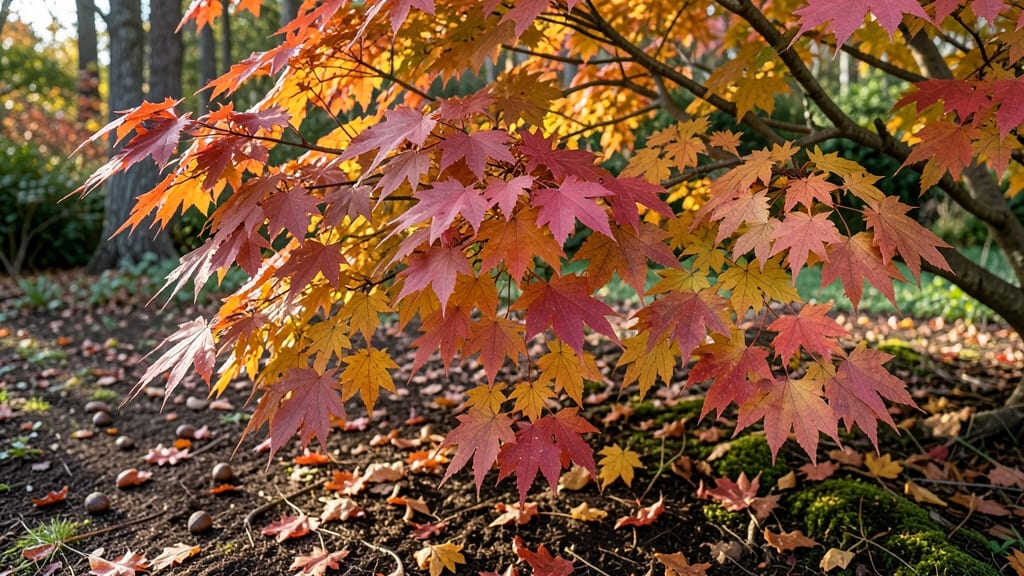
Identifying fall leaf patterns helps you recreate stunning autumn landscapes, with five classic shapes—lobed, serrated, entire, palmate, and pinnate—each creating distinct seasonal displays. These shapes determine how leaves catch sunlight and store pigments, making them key to selecting plants for vibrant fall color.
Understanding these patterns isn't just about aesthetics—it's about science. 🌿 The way a leaf is shaped affects how it absorbs and reflects light during autumn, which directly impacts the intensity of reds, oranges, and yellows.
For example, lobed leaves like those on oaks create dramatic shadows that intensify color, while palmate patterns in maples distribute pigments more evenly across the leaf surface.
I've found that trees with serrated edges often produce deeper reds because their jagged structure traps more sunlight, creating ideal conditions for anthocyanin production—the pigment responsible for those fiery fall hues.
When planning your garden, consider how these patterns interact with your space. Entire-margined leaves, like those on birch trees, create soft, flowing lines that work beautifully in naturalistic plantings, while pinnate patterns offer vertical interest that's perfect for narrow garden beds.
The key is matching the leaf shape to your design goals—whether you want bold focal points or subtle, layered textures. For small gardens, I recommend Japanese maples with their delicate palmate patterns, as they deliver maximum impact in minimal space.
💡 In This Article
- How Leaf Shapes Influence Fall Foliage Color
- Best Trees for Recreating Classic Fall Leaf Patterns
How leaf shapes influence fall foliage color
The science behind autumn colors starts with leaf anatomy.
Vein patterns and edge shapes determine how efficiently leaves absorb sunlight and distribute pigments. Lobed leaves, like those on white oaks, create deep indentations that act like tiny light traps—channeling sunlight to the leaf's core where chlorophyll breaks down first, revealing vibrant yellows and oranges beneath.
The lobed structure also increases surface area, accelerating pigment exposure during shorter daylight hours.
Serrated edges take this effect further by creating micro-environments where sunlight reflects differently along each jagged tooth. This edge detail is why red maples develop such intense crimson hues—the serrations amplify light absorption, triggering higher anthocyanin production (the pigment responsible for reds).
In contrast, entire-margined leaves like birch have smooth edges that diffuse light more evenly, resulting in softer yellow-gold displays. The vein structure plays a supporting role too—prominent veins in palmate patterns (like sugar maples) create natural pathways that help distribute pigments more uniformly across the leaf.
Climate and soil chemistry fine-tune these natural processes. Trees in cooler northern regions develop more intense reds because shorter days and crisp air trigger higher anthocyanin production as a protective mechanism against frost.
The pH of your soil matters too—acidic soils (pH 5.0-6.0) enhance red pigments, while alkaline soils (pH 7.0+) promote yellows.
I've noticed this firsthand in my own garden where my Japanese maples turn brilliant reds in the slightly acidic soil near the oak trees, while nearby hackberry trees with similar leaf shapes produce more muted golds in the limestone-rich areas.
Sunlight exposure creates another layer of variation. Leaves on the south-facing side of trees receive more direct light, which accelerates chlorophyll breakdown and intensifies fall colors by 20-30% compared to shaded leaves.
This is why you'll often see the most vibrant displays on the sunny sides of streets or garden edges.
The angle of sunlight in autumn (lower in the sky) also plays a role—it creates longer shadows that make lobed leaves appear even more dramatic as they cast intricate patterns on lawns and sidewalks.
Don't overlook the role of leaf thickness either. Thicker leaves (like those on oaks) store more starches, which break down into sugars that contribute to red pigment formation. Thin leaves (common in birches) focus more on yellow carotenoids.
This is why oaks often maintain their color longer into winter—those stored nutrients keep the pigment production going even as temperatures drop. For gardeners, this means selecting trees with the right combination of thickness and shape for your climate zone can extend your fall color season by 2-4 weeks.
What most people don't realize is how these patterns interact with wind patterns. Pinnate leaves (like those on horse chestnuts) have a feather-like structure that makes them more susceptible to wind damage, which can actually enhance color development by creating small tears that expose fresh leaf tissue to sunlight.
In my experience, lightly pruning trees with pinnate patterns in early summer can create more dramatic fall displays by encouraging new growth with optimal light exposure.